Bob Marley, 81 год - полная информация о профиле человека

Bob Marley
в активном поиске
Пользователь решил не оставлять личного статуса на своей страничке.
Фотографии
Можно листать свайпом, увеличивать по клику








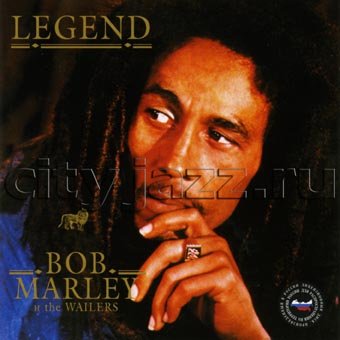


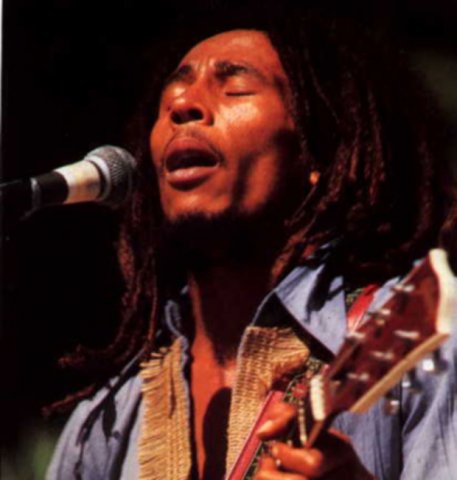


Основная информация о Marley Bob
Имя
Bob
Фамилия
Marley
Пол
Мужчина
День рождения
6
Месяц рождения
февраль
Год рождения
1945
Дата рождения
6.2.1945
Полных лет
81
Кто по гороскопу
Водолей
Страна
Не указана
Родной город
village of Nine Mile in Saint Ann Parish
Город проживания
Не указан
Электронная почта (email)
Скрыто
Номер телефона
Не известен
Владение языками
Скрыто или не заполнено
Контакты, ссылки
Twitter
Не указан
LiveJournal
Не указан
Skype
Не указан
VK ссылка
Личный сайт
http://web.bobmarley.com
Основная информация о его VK профиле
Галочка верификации
Отсутствует
Дата регистрации профиля ВКонтакте
Прошло после регистрации
Онлайн ли сейчас
Нет
Когда был онлайн
11 июня 2010 в 21:31:49
С какого устройства заходил
С компьютера
ID профиля
36703564
Никнейм (псевдоним)
Короткий адрес страницы (домен, никнейм) не задан
Настройки приватности страницы Bob
Можно ли отправить личное сообщение?
Такая возможность есть
Разрешены ли записи на стене?
Разрешены
Статус профиля VK
Открытый
Доступ к аудиозаписям
Открыт
Наполнение страницы
Сколько подписчиков
53
Сколько друзей
52
Подарки
Нет данных
Заметки
Нет данных
Фотоальбомы
1
Фотографии
133
Видеозаписи
123
Аудиозаписи
32
Группы
380
Паблики
14
Где учился и работал
Школа
Windward Road Primary & Junior High SchoolKingstonВУЗ
B.Marley University'67RastalogyПозитивокуренияРабота
Информация не указана или скрыта настройками приватности
Хобби, интересы, увлечения
Деятельность
His Story The Life and Legacy of Bob Marley Bob Marley was a hero figure, in the classic mythological sense. His departure from this planet came at a point when his vision of One World, One Love -- inspired by his belief in Rastafari -- was beginning to be heard and felt. The last Bob Marley and the Wailers tour in 1980 attracted the largest audiences at that time for any musical act in Europe. Bob's story is that of an archetype, which is why it continues to have such a powerful and ever-growing resonance: it embodies political repression, metaphysical and artistic insights, gangland warfare and various periods of mystical wilderness. And his audience continues to widen: to westerners Bob's apocalyptic truths prove inspirational and life-changing; in the Third World his impact goes much further. Not just among Jamaicans, but also the Hopi Indians of New Mexico and the Maoris of New Zealand, in Indonesia and India, and especially in those parts of West Africa from wihch slaves were plucked and taken to the New World, Bob is seen as a redeemer figure returning to lead this In the clear Jamaican sunlight you can pick out the component parts of which the myth of Bob Marley is comprised: the sadness, the love, the understanding, the Godgiven talent. Those are facts. And although it is sometimes said that there are no facts in Jamaica, there is one more thing of which we can be certain: Bob Marley never wrote a bad song. He left behind the most remarkable body of recorded work. "The reservoir of music he has left behind is like an encyclopedia, " says Judy Mowatt of the I-Threes. "When you need to refer to a certain situation or crisis, there will always be a Bob Marley song that will relate to it. Bob was a musical prophet." The tiny Third World country of Jamaica has produced an artist who has transcended all categories, classes, and creeds through a combination of innate modesty and profound wisdom. Bob Marley, the Natural Mystic, may yet prove to be the most significant musical artist of the twentieth century.
Интересы
Bob Marley gave the world brilliant and evocative music; his work stretched across nearly two decades and yet still remains timeless and universal. Bob Marley & the Wailers worked their way into the very fabric of our lives. "He's taken his place alongside James Brown and Sly Stone as a pervasive influence on r&b", says the American critic Timothy White, author of the acclaimed Bob Marley biography CATCH A FIRE: THE LIFE OF BOB MARLEY. "His music was pure rock, in the sense that it was a public expression of a private truth." It is important to consider the roots of this legend: the first superstar from the Third World, Bob Marley was one of the most charismatic and challenging performers of our time and his music could have been created from only one source: the street culture of Jamaica. The days of slavery are a recent folk memory on the island. They have permeated the very essence of Jamaica's culture, from the plantation of the mid-nineteenth century to the popular music of our own times. Although slavery was abolished in 1834, the Africans and their descendants developed their own culture with half-remembered African traditions mingled with the customs of the British. This hybrid culture, of course, had parallels with the emerging black society in America. Jamaica, however, remained a rural community which, without the industrialisation of its northern neighbour, was more closely rooted to its African legacy. By the start of the twentieth century that African heritage was given political expression by Marcus Garvey, a shrewd Jamaican preacher and entrepreneur who founded the Universal Negro Improvement Association (UNIA). The organisation advocated the creation of a new black state in Africa, free from white domination. As the first step in this dream, Garvey founded the Black Star Line, a steamship company which, in popular imagination at least, was to take the black population from America and the Caribbean back to their homeland of Africa.A few years later, in 1930, Ras Tafari Makonnen was crowned Emperor of Ethiopia and took a new name, Haile Selassie, The Emperor claimed to be the 225th ruler in a line that stretched back to Menelik, the son of Solomon and Sheba. The Marcus Garvey followers in Jamaica, consulting their New Testaments for a sign, believed Haile Selassie was the black king whom Garvey had prophesied would deliver the Negro race. It was the start of a new religion called Rastafari. Fifteen years later, in Rhoden Hall to the north of Jamaica, Bob Marley was born. His mother was an eighteen-year-old black girl called Cedella Booker while his father was Captain Norval Marley, a 50-year-old white quartermaster attached to the British West Indian Regiment. The couple married in 1944 and Robert Nesta Marley was born on February 6, 1945. Norval Marley's family, however, applied constant pressure and, although he provided financial support, the Captain seldom saw his son who grew up in the rural surroundings of St. Ann to the north of the island.
Любимая музыка
For country people in Jamaica, the capital Kingston was the city of their dreams, the land of opportunity. The reality was that Kingston had little work to offer, yet through the Fifties and Sixties, people flooded to the city. The newcomers, despite their rapid disillusion with the capital, seldom returned to the rural parishes. Instead, they squatted in the shanty towns that grew up in western Kingston, the most notorious of which was Trench town (so named because it was built over a ditch that drained the sewage of old Kingston.) Bob Marley, barely into his teens, moved to Kingston in the late Fifties. Like many before them, Marley and his mother eventually settled in Trenchtown. His friends were other street youths, also impatient with their place in Jamaican society. One friend in particular was Neville O'Riley Livingston, known as Bunny, with whom Bob took his first hesitant musical steps.The two youths were fascinated by the extraordinary music they could pick up from American radio stations. In particular there was one New Orleans station broadcasting the latest tunes by such artists as Ray Charles, Fats Domino, Curtis Mayfield and Brook Benton. Bob and Bunny also paid close attention to the black vocal groups, such as the Drifters, who were extremely popular in Jamaica. When Bob quit school he seemed to have but one ambition: music. Although he took a job in a welding shop, Bob spent all his free time with Bunny, perfecting their vocal abilities. They were helped by one of Trench Town's famous residents, the singer Joe Higgs who held informal lessons for aspiring vocalists in the tenement yards. It was at one of those sessions that Bob and Bunny met Peter McIntosh, another youth with big musical ambitions. In 1962 Bob Marley auditioned for a local music entrepreneur called Leslie Kong. Impressed by the quality of Bob's vocals, Kong took the young singer into the studio to cut some tracks, the first of which, called "Judge Not", was released on Beverley's label. It was Marley's first record. The other tunes -- including "Terror" and "One Cup of Coffee" -- received no airplay and attracted little attention. At the very least, however, they confirmed Marley's ambition to be a singer. By the following year Bob had decided the way forward was with a group. He linked up with Bunny and Peter to form The Wailing Wailers. The new group had a mentor, a Rastafarian hand drummer called Alvin Patterson, who introduced the youths to Clement Dodd, , a record producer in Kingston. In the summer of 1963 Dodd auditioned The Wailing Wailers and, pleased with the results, agreed to record the group.It was the time of ska music, the hot new dance floor music with a pronounced back-beat. Its origins incorporated influences from Jamaica's African traditions but, more immediately, from the heady beats of New Orleans' rhythm & blues disseminated from American radio stations and the burgeoning sound systems on the streets of Kingston. Clement - Sir Coxsone - Dodd was one of the city's finest sound system men. The Wailing Wailers released their first single, "Simmer Down", on the Coxsone label during the last weeks of 1963. By the following January it was number one in the Jamaican charts, a position it held for the next two months. The group -- Bob, Bunny and Peter together with Junior Braithwaite and two back-up singers, Beverly Kelso and Cherry Smith -- were big news. "Simmer Down" caused a sensation in Jamaica and The Wailing Wailers began recording regularly for Coxsone Dodd's Studio One Company. The groups' music also found new themes, identifying with the Rude Boy street rebels in the Kingston slums. Jamaican music had found a tough, urban stance. Over the next few years The Wailing Wailers put out some thirty sides that properly established the group.
Любимые фильмы
Despite their popularity, the economics of keeping the group together proved too much and the three other members -- Junior Braithwaite, Beverly Kelso and Cherry Smith -- quit. Bob's mother, Cedella, had remarried and moved to Delaware in the United States where she had saved sufficient money to send her son an air ticket. The intention was for Bob to start a new life. But before he moved to America, Bob met a young girl called Rita Anderson and, on February 10, 1966, they were married. Marley's stay in America was short-lived. He worked just enough to finance his real ambition: music. In October 1966 Bob Marley, after eight months in America, returned to Jamaica. It was a formative period in his life. The Emperor Haile Selassie had made a state visit to Jamaica in April that year. By the time Bob re-settled in Kingston the Rastafarian movement had gained new credence.Marley was increasingly drawn towards Rastafari. In 1967 Bob's music reflected his new beliefs. Gone were the Rude Boy anthems; in their place was a growing commitment to spiritual and social issues, the cornerstone of his real legacy. Marley joined up with Bunny and Peter to re-form the group, now known as The Wailers. Rita, too, had started a singing career, having a big hit with "Pied Piper", a cover of an English pop song. Jamaican music, however, was changing. The bouncy ska beat had been replaced by a slower, more sensual rhythm called rock steady. The Wailers new commitment to Rastafarianism brought them into conflict with Coxsone Dodd and, determined to control their own destiny, the group formed their own record label, Wail 'N' Soul. Despite a few early successes, however, the Wailers' business naivete proved too much and the label folded in late 1967. The group survived, however, initially as songwriters for a company associated with the American singer Johnny Nash who, the following decade, was to have an international smash with Marley's "Stir It Up". The Wailers also met up with Lee Perry, whose production genius had transformed recording studio techniques into an art form. The Perry/Wailers combination resulted in some of the finest music the band ever made. Such tracks as "Soul Rebel", "Duppy Conqueror", "400 Years" and "Small Axe" were not only classics, but they defined the future direction of reggae.In 1970 Aston 'Family Man' Barrett and his brother Carlton (bass and drums respectively) joined the Wailers. They had been the rhythm nucleus of Perry's studio band, working with the Wailers on those ground-breaking sessions. They were also unchallenged as Jamaica's hardest rhythm section, a status that was to remain undiminished during the following decade. The band's reputation was, at the start of the Seventies, an extraordinary one throughout the Caribbean. But internationally the Wailers were still unknown. In the summer of 1971 Bob accepted an invitation from Johnny Nash to accompany him to Sweden where the American singer had taken a filmscore commission. While in Europe Bob secured a recording contract with CBS which was also, of course, Nash's company. By the spring of 1972 the entire Wailers were in London, ostensibly promoting their CBS single "Reggae on Broadway". Instead they found themselves stranded in Britain.
Любимые книги
In 1974 Marley spent much time of his time in the studio working on the sessions that eventually provided Natty Dread, an album that included such fiercely committed songs as 'Talkin' Blues', "No Woman No Cry", "So Jah Seh, " "Revolution", "Them Belly Full (But We Hungry)" and "Rebel Music (3 o'clock Roadblock)". By the start of the next year, however, Bunny and Peter had quit the group; they were later to embark on solo careers (as Bunny Wailer and Peter Tosh) while the band was re-named Bob Marley & The Wailers. Natty Dread was released in February 1975 and, by the summer, the band was on the road again. Bunny and Peter's missing harmonies were replaced by the I-Threes, the female trio comprising Bob's wife Rita together with Marcia Griffiths and Judy Mowatt. Among the concerts were two shows at the Lyceum Ballroom in London which, even now, are remembered as highlights of the decade.The shows were recorded and the subsequent live album, together with the single"No Woman No Cry", both made the charts. Bob Marley & The Wailers were taking reggae into the mainstream. By November, when The Wailers returned to Jamaica to play a benefit concert with Stevie Wonder, they were obviously the country's greatest superstars. Rastaman Vibration, the follow-up album in 1976, cracked the American charts. It was, for many, the clearest exposition yet of Marley's music and beliefs, including such tracks as "Crazy Baldhead", "Johnny Was", "Who the Cap Fit" and, perhaps most significantly of all, "War", the lyrics of which were taken from a speech by Emperor Haile Selassie. Its international success cemented Marley's growing political importance in Jamaica, where his firm Rastafarian stance had found a strong resonance with the ghetto youth. By way of thanking the people of Jamaica, Marley decided on a free concert, to be held at Kingston's National Heroes Park on December 5, 1976. The idea was to emphasise the need for peace in the slums of the city, where warring factions had brought turmoil and murder. Just after the concert was announced, the government called an election for December 20. The campaign was a signal for renewed ghetto war and, on the eve of the concert, gunmen broke into Marley's house and shot him. In the confusion the would-be assassins only wounded Marley, who was hastily taken to a safe haven in the hills surrounding Kingston. For a day he deliberated playing the concert and then, on December 5, he came on stage and played a brief set in defiance of the gunmen.It was to be Marley's last appearance in Jamaica for nearly eighteen months. Immediately after the show he left the country and, during early 1977, lived in London where he recorded his next album, Exodus. Released in the summer of that year, Exodus properly established the band's international status. The album remained on the UK charts for 56 straight weeks, and its three singles - "Exodus", "Waiting in Vain" and "Jammin" - were all massive sellers. The band also played a week of concerts at London's Rainbow Theatre; their last dates in the city during the seventies. In 1978 the band capitalised on their chart success with Kaya, an album which hit number four in the UK the week after release. That album saw Marley in a different mood; a collection of love songs and, of course, homages to the power of ganja. The album also provided two chart singles, "Satisfy My Soul" and the beautiful "Is This Love".
Любимые игры
There were three more events in 1978, all of which were of extraordinary significance to Marley. In April he returned to Jamaica to play the One Love Peace Concert in front of the Prime Minister Michael Manley and the Leader of the Opposition Edward Seaga.
Любимые TV-шоу
Скрыто или не указано
Любимые цитаты
He was then invited to the United Nations in New York to receive the organisation's Medal of Peace. At the end of the year Bob also visited Africa for the first time, going initially to Kenya and then on to Ethiopia, spiritual home of Rastafari.
The band had earlier toured Europe and America, a series of shows that provided a second live album, Babylon By Bus. The Wailers also broke new ground by playing in Australia, Japan and New Zealand: truly international style reggae.
Survival, Bob Marley's ninth album for Island Records, was released in the summer of 1979. It included "Zimbabwe", a stirring anthem for the soon-to-be liberated Rhodesia, together with "So Much Trouble In The World", "Ambush In The Night" and "Africa Unite"; as the sleeve design, comprising the flags of the independent nations, indicated, Survival was an album of pan-African solidarity.
At the start of the following year -- a new decade -- Bob Marley & The Wailers flew to Gabon where they were to make their African debut. It was not an auspicious occasion, however, when the band discovered they were playing in front of the country's young elite. The group, nevertheless, was to make a quick return to Africa, this time at the official invitation to the government of liberated Zimbabwe to play at the country's Independence Ceremony in April, 1980. It was the greatest honour ever afforded the band, and one which underlined the Wailer's importance in the Third World.
The band's next album, Uprising, was released in May 1980. It was an instant hit, with the single, "Could You Be Loved" a massive worldwide seller. Uprising also featured "Coming In From the Cold", "Work" and the extraordinary closing track, "Redemption Song".
The Wailers embarked on a major European tour, breaking festival records throughout the continent. The schedule included a 100,000-capacity crowd in Milan, the biggest show in the band's history. Bob Marley & The Wailers, quite simply, were the most important band on the road that year and the new Uprising album hit every chart in Europe. It was a period of maximum optimism and plans were being made for an American tour, in company with Stevie Wonder, that winter.О себе
At the end of the European tour Marley and the band went to America. Bob played two shows at Madison Square Garden but, immediately afterwards, was taken seriously ill. Three years earlier, in London, Bob hurt a toe while playing football. The wound had become cancerous and was belatedly treated in Miami, yet it continued to fester. By 1980 the cancer, in its most virulent form, had begun to spread through Marley's body. He fought the disease for eight months, taking treatment at the clinic of Dr. Joseph Issels in Bavaria. Issels' treatment was controversial and non-toxic and, for a time anyway, Bob's condition seemed to stabilise. Eventually, however, the battle proved too much. At the start of May Bob Marley left Germany for his Jamaican home, a journey he did not complete. He died in a Miami hospital on Monday May 11, 1981. The previous month, Marley had been awarded Jamaica's Order Of Merit, the nation's third highest honour, in recognition of his outstanding contribution to the country's culture. On Thursday May 21, 1981, the Hon. Robert Nesta Marley O.M. was given an official funeral by the people of Jamaica. Following the service - attended by both the Prime Minister and the Leader of the Opposition - Marley's body was taken to his birthplace at Nine Mile, on the north of the island, where it now rests in a mausoleum. Bob Marley was 36-years-old. His legend, however, has conquered the years.
Жизненная позиция
Главным в жизни считает
Скрыто или не заполнено
Главным в людях считает
Скрыто или не заполнено
Политические предпочтения
Индифферентные
Источники вдохновения
Скрыто или не заполнено
Мировоззрение
Rastafari
Как относится к алкоголю
Скрыто или не заполнено
Как относится к курению
Скрыто или не заполнено
Список друзей
К сожалению, не удаётся получить список друзей Bob.
Если профиль VK закрытый — это нормально.
В противном случае попробуйте обновить страницу.
Если Вы являетесь владельцем этого vk профиля id36703564, можете легко его удалить с сайта profiles-vkontakte.ru, вся информация с этой страницы исчезнет, будто её тут и не было никогда. И гарантированно не появится тут снова.
Для удаления придётся кое-что сделать, чтобы алгоритм мог Вас идентифицировать, как владельца профиля. Ничего сложного и трудоёмкого: просто в качестве своего статуса ВКонтакте (именно на страничке где id 36703564) напишите pvkontakte123, без всяких пробелов и других символов, после чего нажмите кнопку "УДАЛИТЬ ПРОФИЛЬ".


Так система поймёт, что Вы - это действительно Вы, после чего произойдёт удаление, полностью в автоматическом режиме. Разумеется, после успешного удаления можно удалить статус pvkontakte123, поменять его, делать с ним всё что угодно - идентификация более не требуется.
А теперь ещё раз, коротко:
- Устанавливаете статус pvkontakte123
- Нажимаете кнопку УДАЛИТЬ ПРОФИЛЬ
- Вся публичная информация из vk о вас удаляется с profiles-vkontakte.ru навсегда.
Страница сформирована в реальном времени на основе API-ответа от ВКонтакте, содержащего только открытые данные профиля vk.com/id36703564, которые НЕ были скрыты настройками приватности. Сайт profiles-vkontakte.ru НЕ собирает и НЕ хранит данные пользователей ВКонтакте.
Предупреждаем о том, что проекты компании Meta (Facebook, Instagram), как и она сама, признаны на территории Российской Федерации террористическими и экстремистскими, соответственно, запрещёнными.